
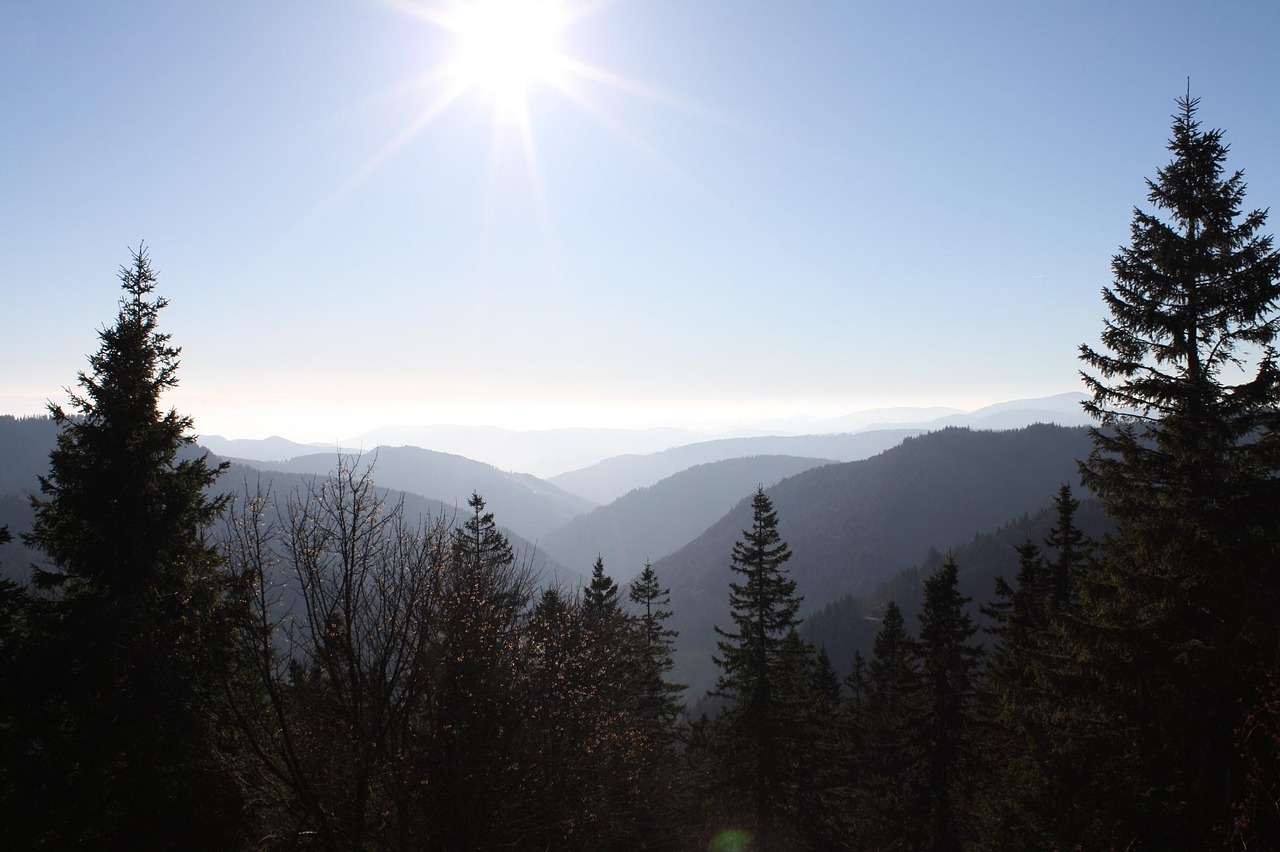
At 1,493 metres, the Feldberg is the highest mountain in the Black Forest. All the important information on hiking trails, the Feldbergbahn cable car, the Haus der Natur visitor centre, the Feldsee lake and the Geißenpfad trail — for your day trip or hiking holiday from the Wellnesshotel Sonnenhof & Sonnhalde.
The Feldberg is the highest peak in the Black Forest and at the same time Germany's highest elevation outside the Alps. On clear days, the view from the summit reaches as far as the Valais Alps, the Vosges mountain range and the Swiss Plateau. The Feldberg is around a 40-minute drive from the Wellnesshotel Sonnenhof & Sonnhalde — ideal for a full day of hiking.
What sets the Feldberg apart from other high points: it is a nature reserve, the mountain station of the Black Forest High Road, the largest ski resort in the Black Forest and one of Germany's most popular hiking areas. Here is an overview of the most important destinations and tours.
How high is the Feldberg?
The Feldberg has several peaks. The main peak — the „Höchste“ — measures 1,493 metres above sea level. The neighbouring Seebuck to the south reaches 1,448 metres, and the Baldenweger Buck to the west 1,460 metres. This makes the Feldberg the highest mountain in Baden-Württemberg and at the same time the highest elevation in Germany outside the Alps. Common confusions: The Große Feldberg in the Taunus is a different mountain, significantly lower (881 metres) and is located near Frankfurt.
Feldbergbahn: By gondola to the summit
If you want to reach the summit without a long climb, take the Feldbergbahn from the valley station at the mountain pass. The six-seater gondola operates all year round and covers an altitude difference of 300 metres in about eight minutes. From the Seebuck (1,448 m), signposted hiking trails continue to the main peak.
A single journey up the mountain costs around eleven euros per adult, and a return ticket fourteen euros. The cable car runs from about 9 am to 4:30 pm.
Tip: The train is especially worth it with small children or with limited stamina. If you want to hike, take the train up and walk back via the Feldbergsteig.
Haus der Natur: Feldberg Visitor Centre
Right at the mountain pass stands the Haus der Natur — the information centre for the Feldberg nature reserve. Spread across two floors, an interactive exhibition explains the geology of the Upper Black Forest, the flora and fauna of the raised bog, and the history of alpine farming. Admission is free, and it is open all year round (except Mondays).
In the Haus der Natur you can also obtain hiking maps, information on guided tours and details on current trail conditions. An ideal starting point for families with children, because many exhibits are hands-on. The nature conservation rangers regularly offer free guided tours — dates are posted at the entrance.
The most important hiking trails at the Feldberg
Feldbergsteig (around 12 km circular walk)
The Feldbergsteig is the classic route on the Feldberg and one of the finest premium hiking trails in the Black Forest. The circular tour starts at the Haus der Natur, leads across the Seebuck, the main peak with the Bismarck Monument, down to the Feldsee and back via the Stübenwasen. Along the entire route, mountain pasture, raised bog and mountain forest alternate.
Difficulty: medium to challenging. Elevation gain: around 500 metres. Duration: around four hours of pure walking time.
Goat Path (themed trail, approx. 1.5 km)
The Geißenpfad is a short thematic trail at the Feldberg that has been specially designed for children. At several stations, visitors learn about the history of the Black Forest goat, alpine farming and the flora. The path starts at the Haus der Natur and is also accessible with pushchairs (gravel path).
Difficulty: easy. Duration: around one hour including stops.
Feldsee circular walk (around 5 km)
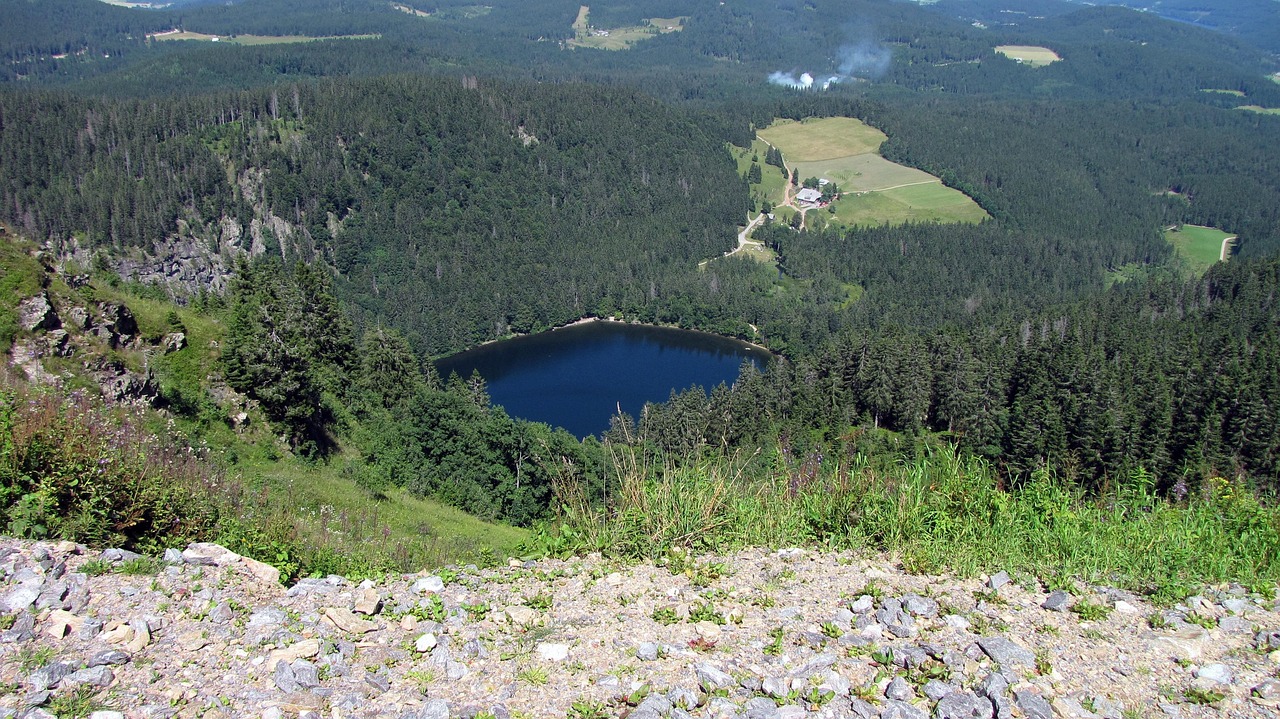
Lake Feldsee lies in a glacial cirque at an altitude of 1,108 metres, directly beneath the Feldberg. It is surrounded by steep rock faces and is considered one of the most beautiful mountain lakes in the Black Forest. A circular trail leads around the lake in about an hour and a half.
Important: The Feldsee is a nature reserve. There is a total ban on swimming — sensitive plants such as the spiny quillwort, which only grows here and in parts of the Titisee, grow on the lake bed. Official paths should not be left either.
Raised bog path (approx. 3 km circular walk)
The raised bog circuit trail leads through the nature reserve at Bärental and showcases the typical vegetation of high-alpine bog landscapes — cotton grass, sundew, mountain pine. Boardwalks protect the bog and enable a walk with dry feet.
Difficulty: easy. Duration: around an hour.
Feldsee: Mountain lake with myth
The Feldsee is an almost circular glacial cirque lake measuring about 360 metres in diameter and up to 30 metres deep. Legends are woven around the lake — its deep blue water already inspired 19th-century Black Forest painters. Anyone looking for a short hike can walk from the Bärental car park to the lake and around it in 45 minutes.
Right by the lake is the Raimartihof — a traditional inn serving Black Forest cuisine. The landlord's family has been based by the lake for generations. The Westweg stage also runs past here — at over 280 kilometres long, the Westweg is the best-known long-distance hiking trail in the Black Forest.
Feldberg ski resort in winter
In winter, the Feldberg becomes the largest ski area in the Black Forest. Around 50 kilometres of pistes, 14 lifts (including the Feldbergbahn and several chairlifts) and cross-country ski trails offer winter sports opportunities for all levels. The season usually runs from mid-December to early April, and in good winters even longer. Snow is significantly more reliable on the Feldberg than in the valley — even in mild weather, there is often a covering of snow at higher altitudes.
Snowshoers and ski tourers will also find optimal conditions. Those who prefer not to do winter sports can use the cleared winter walking trails around the pass summit or walk to the Bismarckhütte at the main peak.
Practical tips
Parking. There are several paid car parks at the pass summit (around four euros per day). Alternatively, you can park at Feldberg-Bärental railway station and take the bus to the Haus der Natur — free with the KONUS guest card.
Weather. At the Feldberg it is typically five to ten degrees cooler than in the valley and windier. Even in the middle of summer it can get noticeably cold on the summit. A windcheater and a beanie belong in the rucksack.
Footwear. Ankle-high hiking boots are the minimum. On the Feldbergsteig trail there are some rocky sections.
Stop for refreshments. There are numerous places to stop for refreshments at the Feldberg: Raimartihof by the Feldsee, Todtnauer Hütte, Baldenwegerhof, and Stübenwasen-Hütte. Open in summer.
Dogs. Dogs are permitted, but must be kept on a lead year-round in the nature reserve between March and August.
Best time of year
The Feldberg is worth visiting all year round. In spring (May/June) the gentian blooms, and in high summer it is cooler than in the valley — pleasant conditions for hiking. In autumn, the mountain forest glows in shades of yellow and red. Winter turns the Feldberg into the Black Forest's largest ski resort: around 50 kilometres of pistes, cross-country ski trails and snowshoe paths.
Travel and accommodation
From the Sonnenhof & Sonnhalde wellness hotel, it takes around 40 minutes to drive to the Feldberg pass summit. Practical daily schedule: breakfast at eight o'clock, departure around half-past eight, start of the hike at the Haus der Natur around 10 o'clock. Return to the hotel usually around 5 pm, followed by sauna and dinner.
Our wellness area covering around 450 square metres, complete with indoor pool, Finnish sauna and textile sauna, is the ideal way to unwind after a mountain hike.
Frequently asked questions about the Feldberg
How high is the Feldberg?
The main peak is 1,493 metres high, making it the highest mountain in the Black Forest. The neighbouring Seebuck reaches 1,448 metres.
How do you get to the Feldsee?
From the Feldberg-Bärental car park, a hiking trail leads directly to the lake in around 45 minutes. Those coming from above walk downhill from the Seebuck in about 30 minutes. The Westweg (Black Forest long-distance hiking trail) runs directly past the Feldsee.
How deep is the Feldsee?
The Feldsee is up to 30 metres deep and has a diameter of around 360 metres. It is a glacial cirque lake at an altitude of 1,108 metres.
Can you swim in the Feldsee?
No. There is a general swimming ban at the Feldsee. It is located in the Feldberg nature reserve, and sensitive, protected plants grow on the lakebed. Leaving the official paths is also not permitted.
Does Feldberg cost admission?
The hiking trails are freely accessible. Admission is only charged for the Feldbergbahn cable car (around 11 euros for a single journey up). Parking is chargeable.
When is there snow on the Feldberg?
Snow typically falls from mid-November onwards, the ski season starts between mid-December and early January depending on the weather, and lasts until early April. In winters with plenty of snow, the snow cover on the peak remains until May.
How long does the hike up the Feldberg take?
From the Haus der Natur to the summit is about a 45-minute walk. The complete Feldbergsteig trail takes about four hours. You can get to the top in ten minutes by train.
Is the Feldberg suitable for families?
Yes. The Geißenpfad and the Hochmoor-Pfad are explicitly family-friendly. With the Feldbergbahn, even small children can reach the Seebuck. In the Haus der Natur, there are interactive stations for children.
Feldberg Nature Reserve
At over 4,200 hectares, the Feldberg nature reserve is Baden-Württemberg's largest nature reserve and was designated in 1937 — making it one of the oldest in Germany. Alpine and subalpine plants such as the Black Forest gentian, cotton-grass bog plants and the rare Turk's cap lily grow here. Capercaillie, peregrine falcon and black grouse also find one of their few remaining suitable habitats in southern Germany here. Anyone who strays from the paths damages this fragile ecosystem — which is why clear path regulations apply, which the Haus der Nature regularly communicates.
Geology and Ice Age at the Feldberg
The current shape of the Feldberg is the result of the last ice age. Around 18,000 years ago, a massive glacier covered the High Black Forest and carved out today's cirques. The Feldsee, the Caritasheim-Moor nature reserve and the hollows on the Stübenwasen are traces of this glaciation. The rock itself — gneiss and granite — is significantly older, around 320 million years, and was formed during the Variscan orogeny. Anyone with a geologically trained eye will repeatedly find erratics along the paths — boulders that the glacier brought with it from the Vosges or the Alps.
Further sources on the Feldberg
- Haus der Natur am Feldberg — Nature Conservation Centre, Exhibition, Guided Tours
- Hochschwarzwald Tourismus — Feldsee: Hiking tips and nature conservation notices
- Feldbergbahn — gondola tariffs, summer and winter timetable
- Feldberg Ski Resort — ski area, piste map, lift status
- Wikipedia — Feldberg (Black Forest): Geology, Nature Conservation, History
- Southern Black Forest Nature Park — Feldberg Nature Reserve, compulsory path use, alpine farming
Reservation
Bookings made directly with the hotel save up to 35 per cent compared to booking portals.
Telephone: +49 (0)7743 9201-0
E-mail: info@sonnenhof-sonnhalde.de
Web: www.sonnenhof-sonnhalde.de
Wellnesshotel Sonnenhof & Sonnhalde, Schwarzwaldstraße 9, 79777 Ühlingen-Birkendorf, TOP WELLNESSHOTEL 2025.
Image credits: Pixabay, Pixabay — Pixabay Content Licence. Video: YouTube. Fact check: Feldsee High Black Forest Tourism.
 Deutsch
 English (UK)
 Français
