
Black Forest ham is a trimmed, boneless, smoked raw ham that is produced exclusively in the Black Forest and has carried the EU seal “g. g. A.” (protected geographical indication, PGI) since 1997. This article explains what lies behind it, how the ham is made and how to store and enjoy it properly. It draws on information from the Schutzverband der Schwarzwälder Schinkenhersteller and on the EU register.
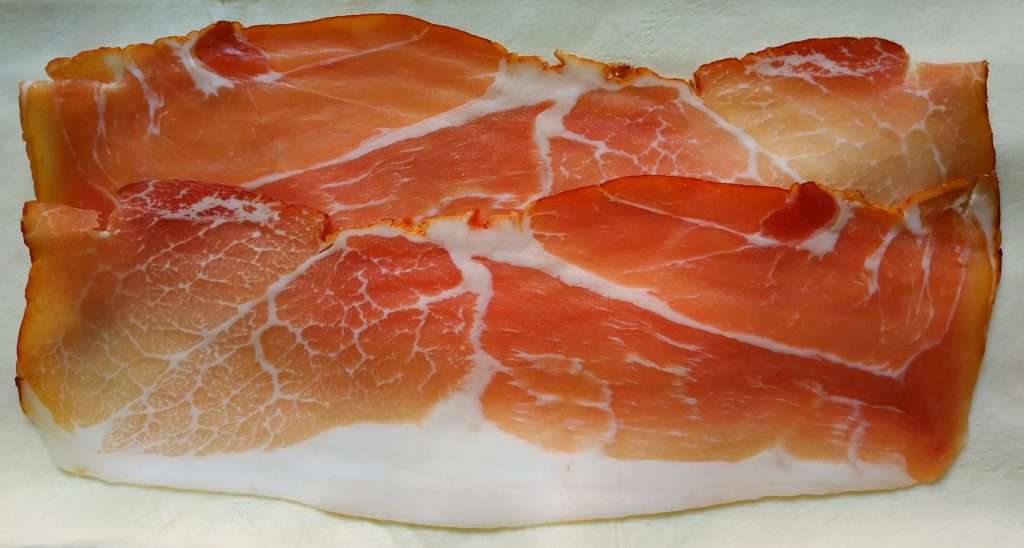
Black Forest ham: what makes it special
On the outside the ham is chestnut brown; when cut, it shows a rich red. It also has a white rim of fat, the “Speckrändle”, which, according to the ham producers' protection association, contributes significantly to the enjoyment and rounds off the aroma. The taste is regarded as strong and savoury with a delicate hint of smoke: the lean meat determines the strong flavour, while the fat rounds it off.
The raw ham gets its aromas from curing and from smoking over fir and spruce wood. Schwarzwald Tourismus describes the hind leg used for this as the most valuable cut of the pig.
What does PGI mean for Black Forest ham?
“g. g. A.” stands for “geschützte geografische Angabe” (protected geographical indication). The EU introduced this seal as protection of origin for traditional foods. Black Forest ham was entered in the register in 1997, after the EU had introduced its protection scheme for agricultural products in 1993.
According to the protection association, this means two things for the ham: it is produced exclusively in the Black Forest region, and it must comply with a binding product specification that sets out the traditional method of production.
Where does the meat come from?
Production takes place in the Black Forest, but the meat itself does not have to come from there: the raw pork legs may also be sourced from outside the production zone, because the Black Forest has traditionally had no significant pig farming. Before processing, the hind hams are checked for husbandry, feeding and type (meat pig), weight, temperature, and fat and pH content.
Where may Black Forest ham be produced?
The area is clearly defined: according to the protection association, it extends from Pforzheim in the north to Lörrach near the Swiss border. The exact boundary lines for the north, south, east and west are listed by the association in its FAQ .
Inspection and protection association
The association was founded in 1989 in Villingen-Schwenningen by 28 producers (see Chronicle). According to the association, its members ensure quality through strict quality management, regular external testing and the official inspections carried out by the Regierungspräsidium Karlsruhe (regional council). On packaging, you can recognise the PGI seal by its blue-and-yellow logo.
How Black Forest ham is made
The main steps are salting, seasoning, “Brennen”, smoking and – decisive for the distinctive aromas – maturing. According to the protection association, the process is not complete until many weeks have passed.
| Step | What happens |
|---|---|
| Goods-in inspection | The weight, temperature, fat content and pH value of the hind legs are measured before further processing. |
| Dry curing and seasoning | The seasoning mix includes salt, pepper, coriander, garlic and juniper berries, among other things. Dry curing draws water out of the meat and forms a mother brine, in which each ham rests for up to three weeks. |
| Brennen (“burning”) | The legs are taken out of the brine and “burn” for two weeks in so-called Brennräume (“burning rooms”). There the salt is distributed evenly; the ham takes on its typical red colour and its aroma. |
| Smoking | In tall smoking towers the hams are cold-smoked at about 25 degrees for several days and are repeatedly rearranged. The smoke comes from burning native softwoods and smouldering sawdust. |
| Maturing | The hams mature for several weeks in climate-controlled rooms. A ready-to-eat ham has a water-to-protein ratio of 2.2 to 1. |
| Quality and sensory testing | Appearance, consistency, smell and taste are checked. |
Enjoying and storing Black Forest ham properly
Enjoying
The protection association recommends thin slices, in which the ham develops its full aroma. In the Black Forest, by the way, it is cut from the joint into small strips and eaten straight away, just as it is. It goes well as a topping for bread, as an ingredient in many dishes, or on a good piece of bread with a glass of wine.
Schwarzwald Tourismus recommends a Baden wine or a regional beer with it. The Rothaus brewery is also part of the region: you can read more about it in our post on Rothaus Brewery.
Storing
- Never store in an airtight container for any length of time.
- Wrap sliced ham loosely in parchment paper and eat it as soon as possible.
- It is best to keep a whole piece in a dark, cool place with a fresh supply of air.
- Smaller pieces can be kept in a tea towel in the meat compartment of the refrigerator.
- If a whitish coating has formed, the piece is briefly rinsed under running water and dried with a cloth.
That is the advice given by the protection association.
Ham museum on the Feldberg
If you would like to find out more, visit the Schwarzwälder Schinkenmuseum (Black Forest Ham Museum) in the Feldbergturm at an altitude of 1,493 metres. According to the protection association, interactive stations in three languages explain there what you need to know about production and enjoyment. The address is Franz-Klarmeyer-Weg, 79868 Feldberg (Schwarzwald); current opening times and admission information are on the website of the protection association.
From the Wellnesshotel Sonnenhof & Sonnhalde it is around 32 km to the Feldbergturm, about 45 minutes by car (calculated with the OSRM route planner, as of October 2026). The trip combines well with a hike; you will find ideas for this in our post on Feldberg. Schwarzwald Tourismus also points to the Schinkenweg in Höchenschwand.
Regional specialities in the Southern Black Forest
Our hotel is in Ühlingen-Birkendorf in the southern High Black Forest. At the Restaurant Sonnenhof, head chef and hotelier Uli Blatter cooks creative Baden cuisine with regional ingredients and a menu that changes with the seasons. You can see how we combine enjoyment and relaxation on our page Culinary delights in the Black Forest.
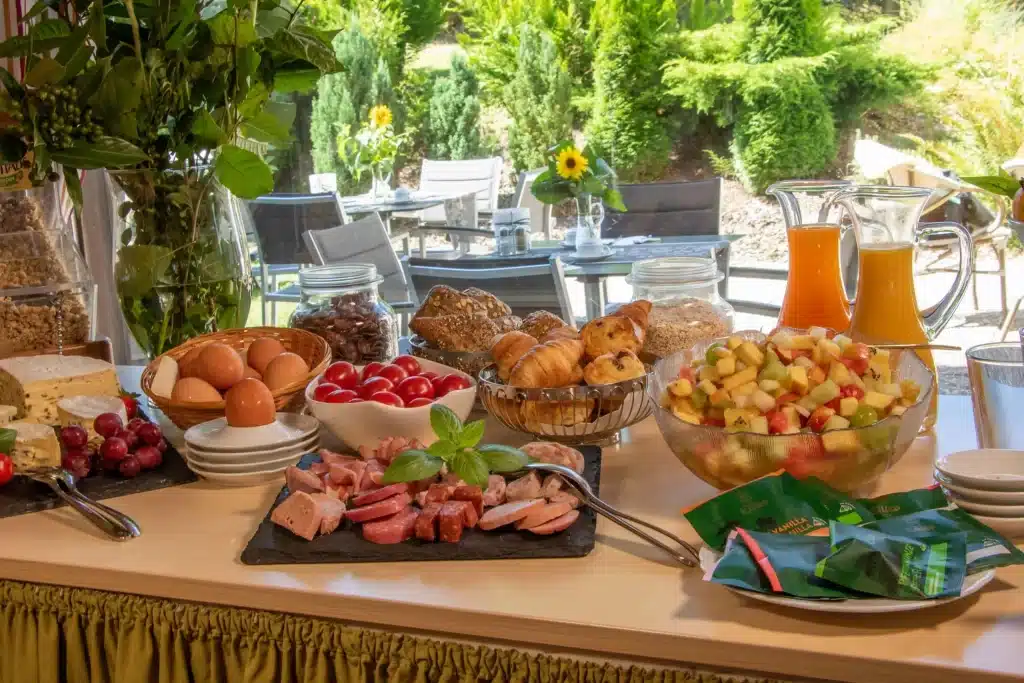
Our packages include an overnight stay, breakfast buffet, gourmet menu, afternoon snack buffet and use of the spa area. We present another Baden speciality in our post on Baden Schäufele . You can enquire directly on our Book page about rooms and packages.
Frequently asked questions
What does PGI mean for Black Forest ham?
The abbreviation stands for “geschützte geografische Angabe” (protected geographical indication). The ham must be produced in the Black Forest and comply with the binding product specification. This has applied since 1997.
Does the pork have to come from the Black Forest?
No. The meat may be sourced from Germany and from other origins. The ham is produced – that is, cured, smoked and matured – in the Black Forest.
Does Black Forest ham have a bone?
No. It is a boneless, trimmed, smoked raw ham.
How long does production take?
Many weeks, according to the protection association. Resting in the brine alone takes up to three weeks, followed by two weeks of Brennen, several days of smoking and several weeks of maturing.
What is Black Forest ham smoked with?
The smoke comes from burning native softwoods and smouldering sawdust. The protection association names fir and spruce wood as the sources of the aroma.
How do I store Black Forest ham properly?
Not permanently airtight: wrap sliced ham loosely in parchment paper and eat it soon; keep a whole piece in a dark, cool place with a fresh supply of air.
Sources
- Schutzverband der Schwarzwälder Schinkenhersteller e.V.: Home page (production, EU protection, museum)
- Schutzverband der Schwarzwälder Schinkenhersteller e.V.: FAQ (appearance, storage, production area, origin of the meat)
- Schutzverband der Schwarzwälder Schinkenhersteller e.V.: Chronicle (founding in 1989, EU registration in 1997, ham museum)
- European Commission, eAmbrosia: application “Schwarzwälder Schinken” (PGI)
- Schwarzwald Tourismus: Black Forest ham
You might also like
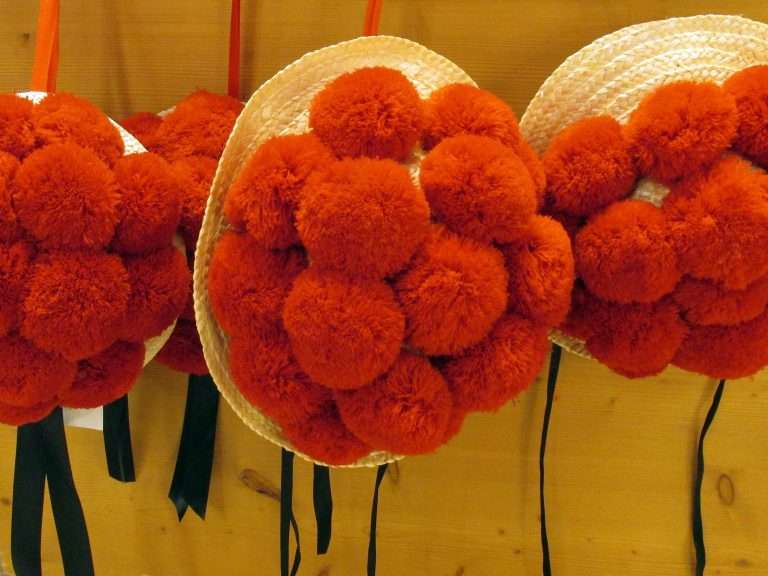
Bollenhut: Origin, meaning and where to see it
Bollenhut: Origin from Gutach, Kirnbach and Reichenbach; meaning of red and black; 14 balls – and museums where you can see the traditional costume.
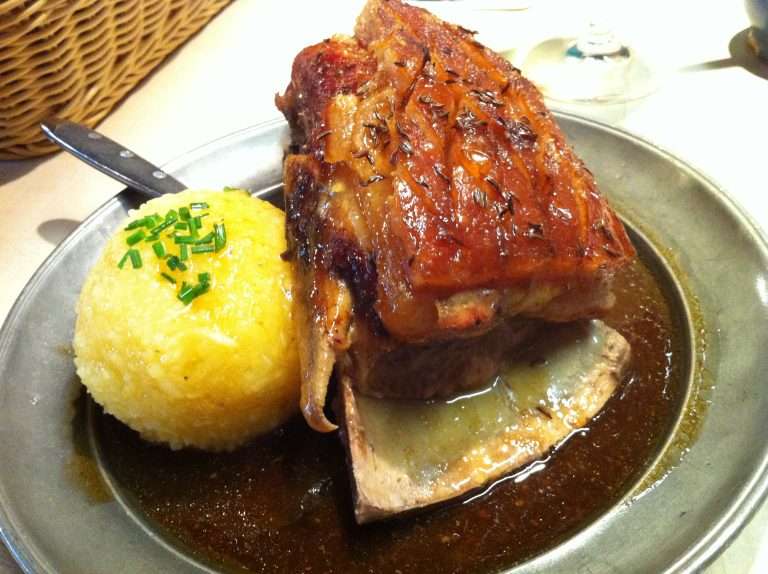
Baden-style Schäufele: origins, preparation and recipe
Schäufele from Baden: what makes the cured, smoked pork shoulder special, how it differs from the Franconian one, plus a recipe and side dishes.

Black Forest gateau: history and classic recipe
Black Forest gateau: who invented it is disputed. What the guidelines require, plus a classic recipe for the 26 cm springform tin.
 Deutsch
 English (UK)
 Français
