
Black Forest gateau is considered one of the best-known cakes in Germany: dark chocolate sponge layers, cream, cherries, kirsch (Kirschwasser) and chocolate shavings. But who invented it is still disputed to this day. In this article we tell you what can be proven and what cannot, explain what belongs in a Black Forest gateau, and give a classic basic recipe for making at home.
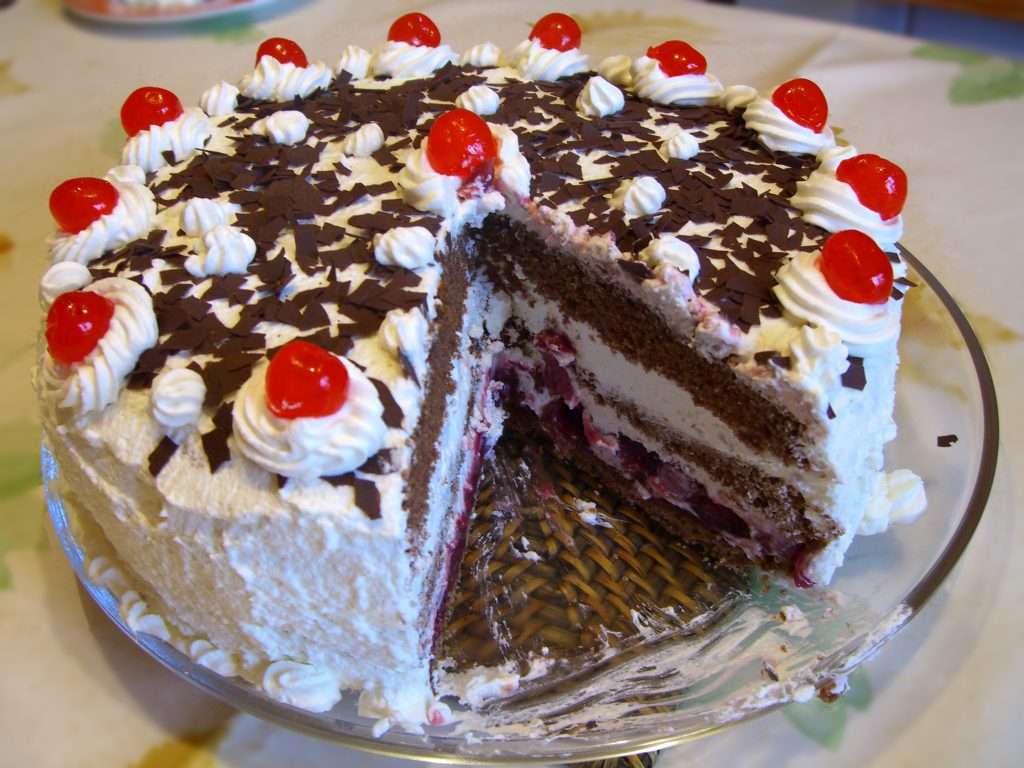
Black Forest gateau: what goes into it?
What consumers may expect of a Black Forest gateau is described in the Guidelines for Fine Bakery Products (Leitsätze für Feine Backwaren) of the German Food Code Commission (revised edition of 9 January 2025). According to these, Black Forest gateaux are kirsch cream cakes or kirsch buttercream cakes, also in combination. The filling is buttercream and/or cream, in some cases ganache, and cherries. The kirsch content must be clearly perceptible in the taste.
For the bases, dark and/or light Viennese or sponge bases are used; the batter for the dark bases contains at least 3 per cent cocoa powder or heavily de-oiled cocoa. Shortcrust pastry may also be used for the bottom layer. The cake is coated with buttercream or cream and garnished with chocolate shavings.
Another point is interesting: the guidelines cite Black Forest gateau as an example of a geographical indication that is merely a pointer to a particular composition and method of production, not a true indication of origin. That the cake must be made in the Black Forest is not stated there.
History: who invented Black Forest gateau?
The honest answer is: nobody knows for sure. There are several accounts, and the sources assess them differently.
The Bad Godesberg story
It was long considered certain that the confectioner Josef Keller (1887–1981) invented the cake in 1915 in Bad Godesberg. He is said to have later taken it to his café in Radolfzell on Lake Constance. Planet Wissen describes this version but points out that the Black Forest was probably not the place of origin.
Wikipedia, on the other hand, doubts this account: Keller only claimed in 1975 to have made the cake in Café Agner in Bad Godesberg, and could have arrived there after April 1915 at the earliest. The name was already documented in writing at that time, namely in a notice from Brandenburg an der Havel dated 17 February 1915.
The Tübingen story
The Tübingen city archivist Udo Rauch names master confectioner Erwin Hildenbrand of Café Walz in Tübingen as the inventor and dates the first cake to spring 1930. According to Planet Wissen, this is mainly documented by the oral recollections of third parties. The Radolfzell city museum, in contrast, regards the Tübingen version as a legend.
What can be proven
- According to Wikipedia, the name already appears in writing in February 1915.
- According to Wikipedia, the earliest published recipe dates from 1934 (Johannes Martin Erich Weber, “250 Konditorei-Spezialitäten”). It still called for a shortcrust base, nut mixtures and a cherry cream, so it differs markedly from today's cake.
- According to Planet Wissen, the cake has spread across the whole of Germany since the 1930s.
Where does the name come from?
Here, too, there are only conjectures, which Wikipedia expressly describes as unconfirmed: the dark chocolate shavings might recall the Black Forest, kirsch is considered typical of the region, and the colours of the women's traditional costume with the Bollenhut have also been named as the origin of the name. You can read more about cherry brandy in our article on Black Forest kirsch.
Classic recipe for a Black Forest gateau
The following is a classic basic recipe with usual quantities for a springform tin 26 centimetres in diameter (about 12 to 14 slices). It is based on common recipes from magazines and recipe portals (see Sources) and is not a recipe from our hotel kitchen. Allow around 60 to 90 minutes of working time and at least two hours' chilling time.
Ingredients
Chocolate sponge
- 6 eggs
- 200 g sugar
- 120 g flour
- 100 g cornflour
- 30 g cocoa powder
- 1 pinch of salt
Filling and decoration
- 500 g sour cherries (from a jar or fresh, drained; reserve the juice)
- 1 tbsp cornflour
- 1 cinnamon stick
- 50 g sugar (for cherries and cream together)
- 800 g whipping cream, plus cream stabiliser as directed on the packet
- 8 tbsp kirsch
- 50 g dark chocolate for grating
Preparation
- Preheat the oven to 180 degrees, top and bottom heat. Line the base of a 26 cm springform tin with baking paper.
- Separate the eggs. Beat the egg whites with the salt until stiff and let the sugar trickle in gradually until it has dissolved. Carefully fold in the egg yolks. Sift the flour, cornflour and cocoa over the top and fold in gently.
- Pour the batter into the tin and bake for about 30 minutes; start the skewer test after 20 minutes. Leave the sponge to cool.
- Set aside about 12 nice cherries for decoration and halve the rest if necessary. Top up the reserved juice to 150 millilitres, stir in the cornflour and bring to the boil with the cinnamon stick. Add the cherries, bring to the boil again, remove the cinnamon stick and let the filling cool completely.
- Cut the cooled sponge horizontally into three layers. Place the bottom layer in a cake ring and drizzle it with about 3 tbsp of kirsch.
- Whip the cream with the remaining sugar and the cream stabiliser until stiff. Spread a little cream thinly over the base, fill a piping bag with some of the cream, pipe rings and fill the gaps with half of the cherry filling.
- Place the second layer on top, press down lightly, drizzle with kirsch and cover in the same way with cream and the remaining cherry filling. Place the third layer on top and soak it with the rest of the kirsch.
- Remove the cake ring. Coat the cake all over with cream, then decorate with dollops of cream, the cherries set aside and grated chocolate.
- Chill the cake for at least two hours and only then cut it.
Note: The kirsch is not baked, so the alcohol stays in the cake. The cake is therefore not suitable for children, pregnant women or anyone who wishes to avoid alcohol; instead, you can drizzle the sponge layers with the cherry juice. However, a cake made in this way no longer matches the description in the Leitsätze (guidelines).
Tips for success
- The cherry filling must be well cooled before it goes onto the cream, otherwise the cream will turn soft.
- Let the sponge cool completely before you cut it into layers.
- Use kirsch sparingly, but enough that its flavour remains noticeable, as the guidelines also require for the commercially made cake.
- Chill a fully decorated cake before serving so that the layers firm up.
Black Forest gateau and culinary delights in the Southern Black Forest
If you would rather enjoy the cake than bake it, you can go in search of regional specialities in the Southern Black Forest. In our Wellnesshotel Sonnenhof & Sonnhalde in Ühlingen-Birkendorf, the Restaurant Sonnenhof serves creative Baden cuisine with regional ingredients; the menu changes with the season. You can read more about this on our page Culinary delights in the Black Forest.
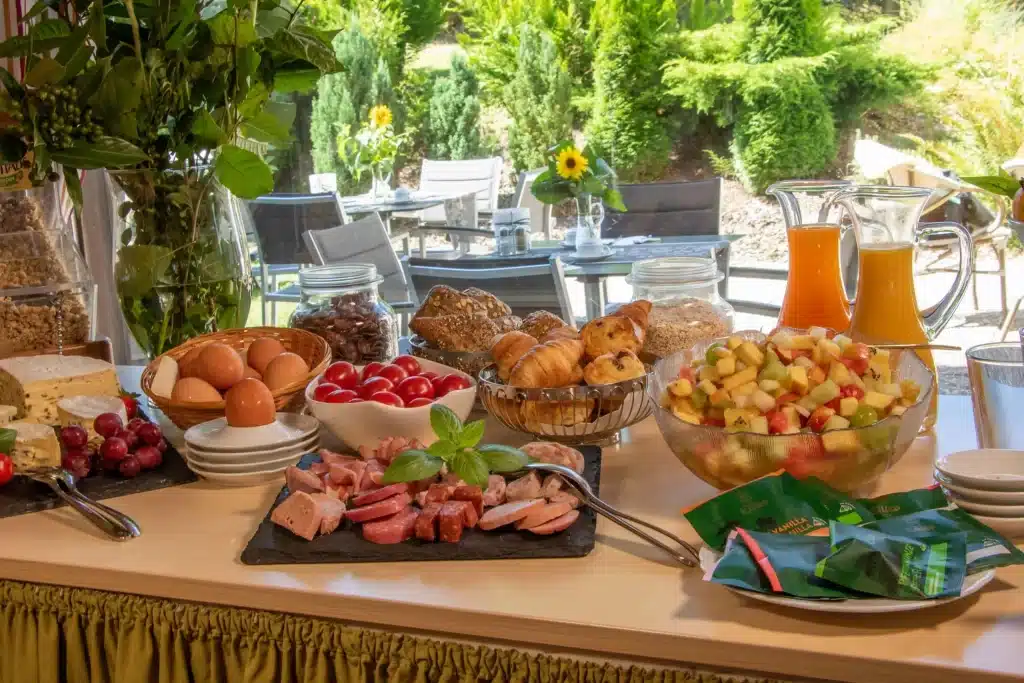
Our packages include the daily gourmet menu, the afternoon snack buffet “sweet & savoury” and the breakfast buffet; you will find the overview at Offers. You can book directly on our website. Book page.
Frequently asked questions
Who invented the Black Forest gateau?
That is disputed. The names put forward are the pastry chef Josef Keller (Bad Godesberg, 1915) and the master pastry chef Erwin Hildenbrand (Tübingen, 1930). Wikipedia doubts the Keller version, while the Stadtmuseum Radolfzell regards the Tübingen one as a legend.
Does a Black Forest gateau have to come from the Black Forest?
The Leitsätze für Feine Backwaren (guidelines for fine bakery products) cite the name as an example of a reference to composition and method of production, not as a genuine indication of origin. They do not require production in the Black Forest.
Does the cake have to contain kirsch (Kirschwasser)?
According to the guidelines, yes: the kirsch content must be clearly noticeable in the flavour. The guidelines do not specify any particular origin for the kirsch.
Which cherries should you use?
The recipes we consulted use sour cherries, from a jar or fresh. They should be well drained; the juice collected is needed for the filling.
How long does the cake need to chill?
The recipes we consulted specify at least two hours in the refrigerator before the cake is cut.
Where does the name come from?
That has not been established. The suggested origins of the name are the dark chocolate shavings, the kirsch and the colours of the traditional costume with the Bollenhut; all three explanations are considered unconfirmed.
Sources
- Deutsche Lebensmittelbuch-Kommission: Leitsätze für Feine Backwaren (guidelines for fine bakery products), revised version of 9 January 2025 (section 2.2.7.4 Schwarzwälder Kirschtorte)
- Wikipedia: Schwarzwälder Kirschtorte (history, origin of the name, first publication)
- Planet Wissen: Schwarzwälder Kirschtorte (Keller version, Tübingen version, spread)
- Lecker: Kirsch-Sahnetorte Schwarzwälder Art (recipe comparison)
- Für Sie: Schwarzwälder Kirschtorte (recipe comparison)
- Küchengötter: Schwarzwälder Kirschtorte (recipe comparison)
You might also like
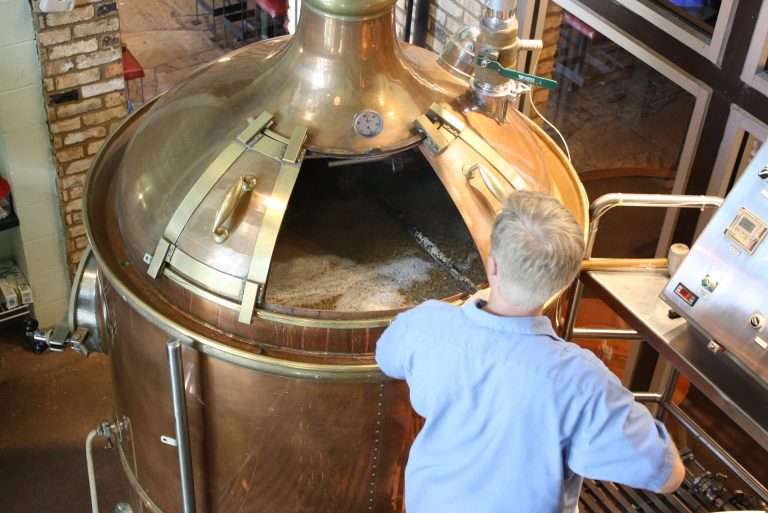
Rothaus Brewery — Tannenzäpfle, guided tour and tips from the hotel
Rothaus Brewery Black Forest: Tannenzäpfle home, brewery tour and Germany's highest beer garden (1,000 m). Tips + directions from Hotel Sonnenhof.

Black Forest ham: production, PGI and enjoyment
Black Forest ham PGI: what the EU seal means, how the raw ham is made, how to store it – and where the ham museum is.
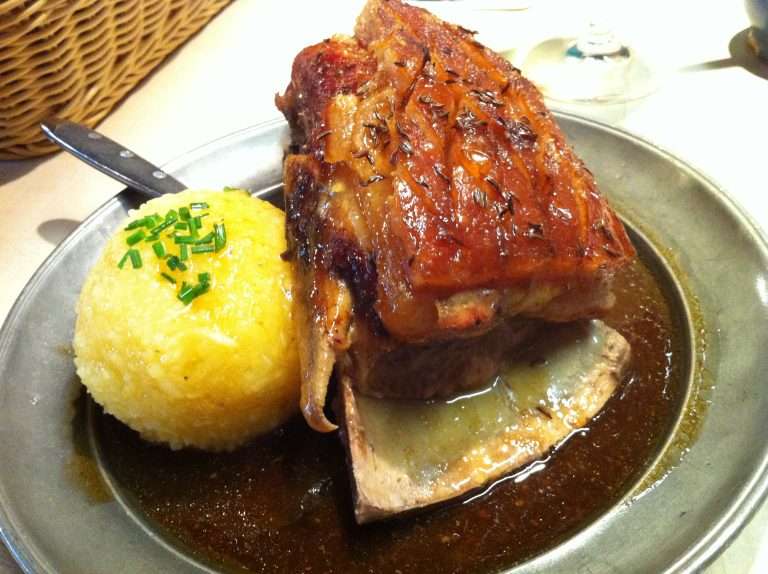
Baden-style Schäufele: origins, preparation and recipe
Schäufele from Baden: what makes the cured, smoked pork shoulder special, how it differs from the Franconian one, plus a recipe and side dishes.
 Deutsch
 English (UK)
 Français
